
Services
Laser marking is a technology that uses laser beams to create permanent markings (e.g. text, logos, graphics, barcodes) on materials. It is a non-contact method suitable for a wide range of materials including metals, plastics, wood, glass and leather.

the object to be marked is placed in the laser marking device and the necessary parameters (e.g. laser power, marking speed, frequency) are set.
The laser beam is guided through an optical system (lenses and mirrors) to a precisely defined spot on the material. The laser beam modifies the surface of the material (e.g. by burning, engraving, colour changing) to produce the desired marking. Maximum marking area: 175 x 175 mm.
durable permanent marking that is clearly legible.
Laser marking ensures extremely precise and detailed marks that are clearly legible.
Laser-engraved marks are highly resistant to abrasion, scratches, chemicals and other external influences.
Laser marking is suitable for a wide range of materials, allowing marking to be applied to both soft and hard surfaces.
Laser marking is a fast process that allows large quantities to be marked in a short time.
As laser marking is a non-contact method, it does not damage the material being processed and does not require any additional materials.
Laser marking allows you to create a wide variety of markings (e.g. text, logo, graphics, barcode, QR code) and adapt them to your needs.
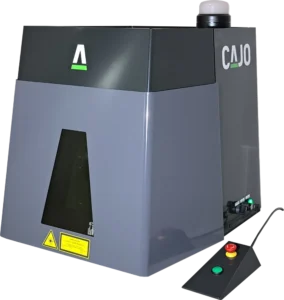
Cajo Vega Desk 20 W fiber laser:
| Marking area | Minimum height | Maximum height |
| 95 mm | 310 mm | |
| 110 x 110 mm | 15 mm | 230 mm |
| 175 x 175 mm | 0 mm | 100 mm |
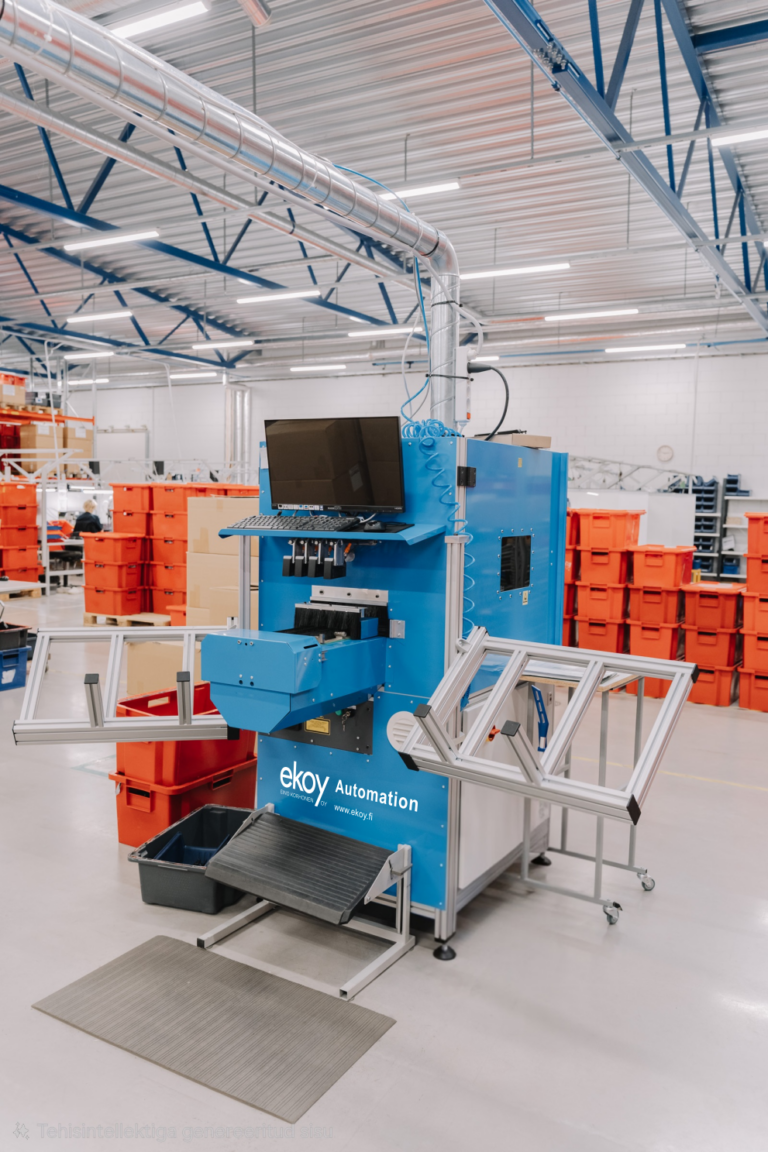
A laser marking line designed by EKOY Automation, featuring Cajo Tailor Fiber 20 W lasers.
This is an automated solution with a marking area of 175 x 175 mm.
The option to use laser marking either as a standalone operation or as part of an automated production process.

Laser marking is widely used in various industries, such as:
product labelling (e.g. serial numbers, logos, barcodes).
labelling of promotional products and souvenirs.
labelling of electronic components and equipment.
Pad printing is a technique used to apply logos and text to small, hard objects. It uses silicone pads that transfer ink from the printing plate to the product. Pad printing is suitable for objects of different shapes, including curved and concave surfaces.
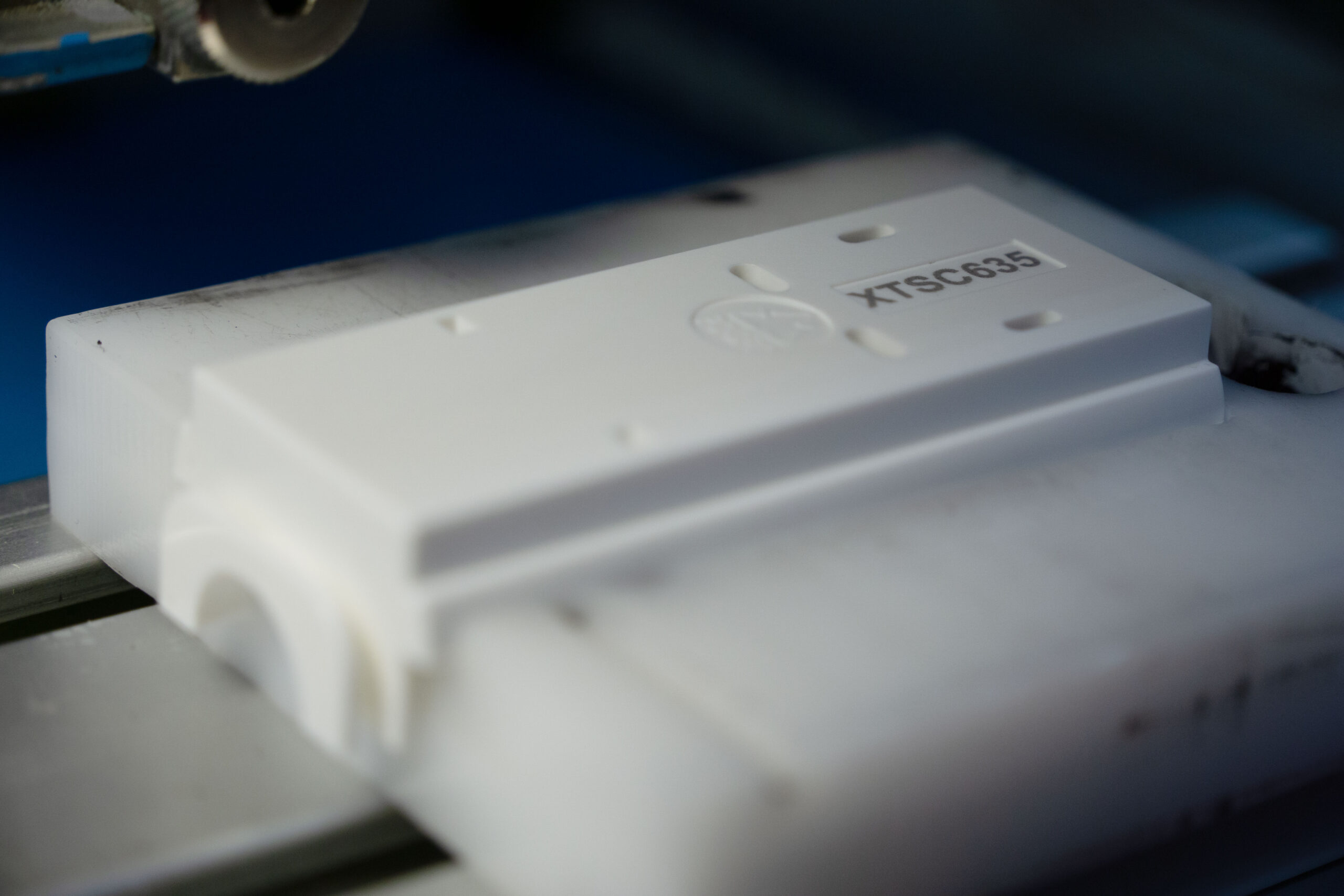
Pad printing is similar in principle to stamping. The image is created on a special printing plate, known as a cliché, where the design is engraved as a series of small recesses. These recesses are filled with ink, and excess ink is removed so that ink remains only in the areas forming the intended image.
In the next stage, a soft silicone pad picks up the image from the cliché and transfers it onto the product. This elastic silicone pad is what makes pad printing unique, as it can easily adapt to both flat and complex-shaped surfaces.
Thanks to this technology, high-quality and precise prints can be applied to a wide variety of products, including curved, concave, convex, and uneven surfaces. As a result, pad printing is widely used in the electronics industry, industrial component marking, promotional products, and many other applications where conventional printing methods cannot achieve the desired result.
Advantages of Pad Printing:
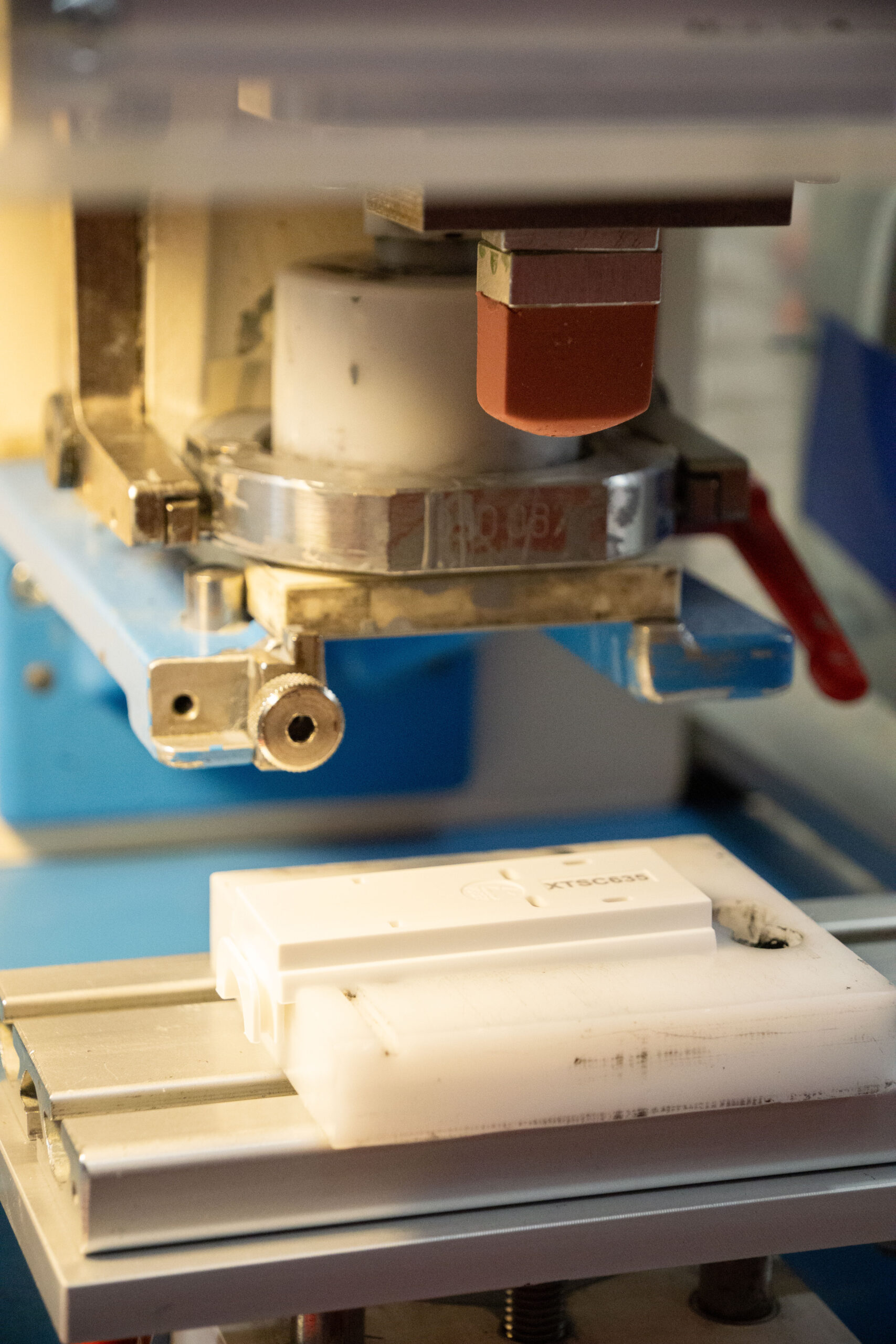
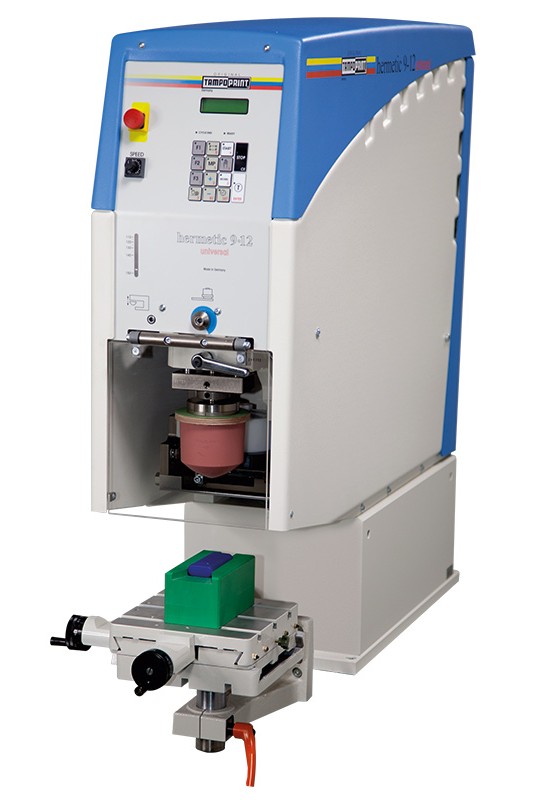
The TAMPOPRINT electromechanical pad printing machine allows for the application of detailed logos, text, and symbols onto products with a wide variety of shapes and surface structures.
A closed ink system ensures consistent print quality, sharp contours, and an environmentally friendly workflow, even for larger batches.
The device is perfectly suited for the high-quality marking of electronic components, industrial parts, and promotional products.
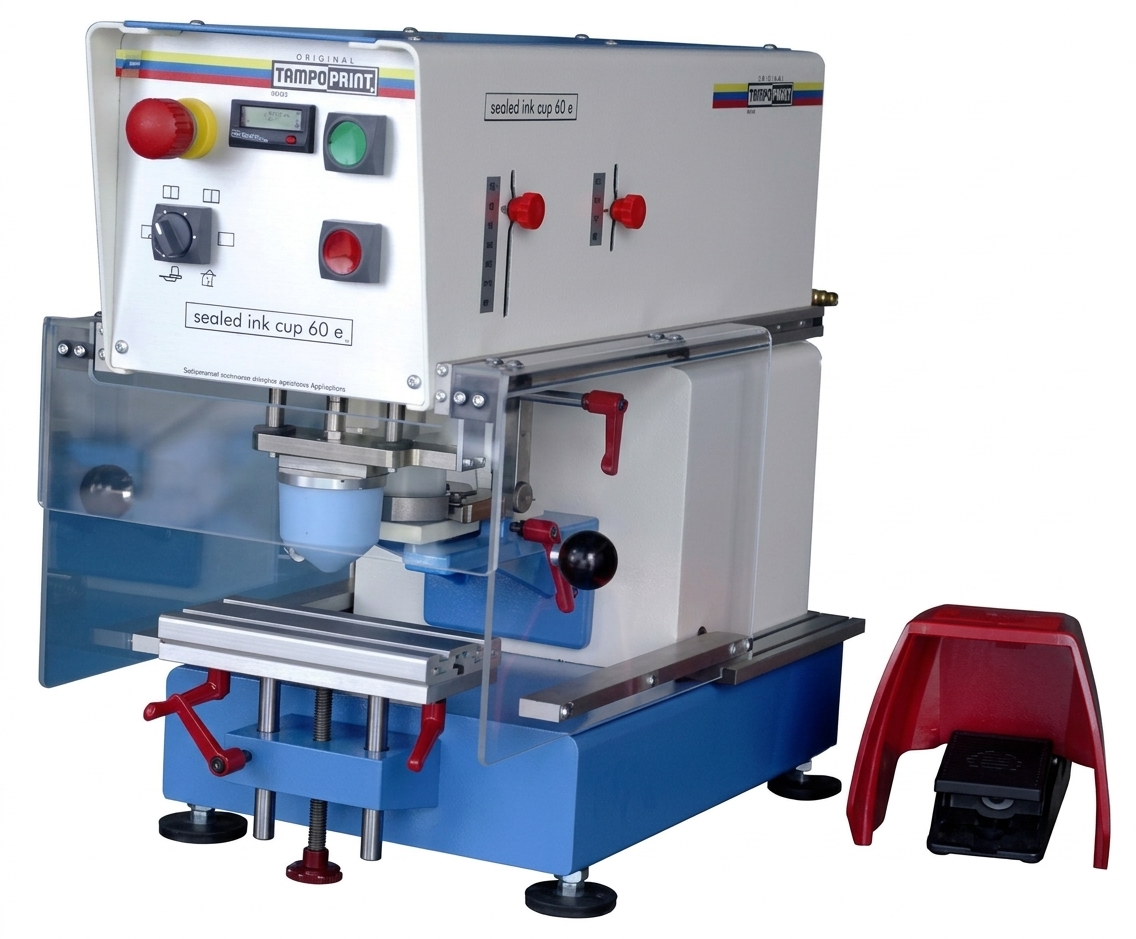
The TAMPOPRINT compact electropneumatic pad printing machine is designed for precise and rapid single-color printing on small to medium-sized parts.
A closed ink system keeps the ink viscosity stable and ensures a consistent, clean impression throughout the entire printing cycle.
Thanks to its high repeatability, the device is perfectly suited for marking both smaller custom batches and large-scale series products or technical components.